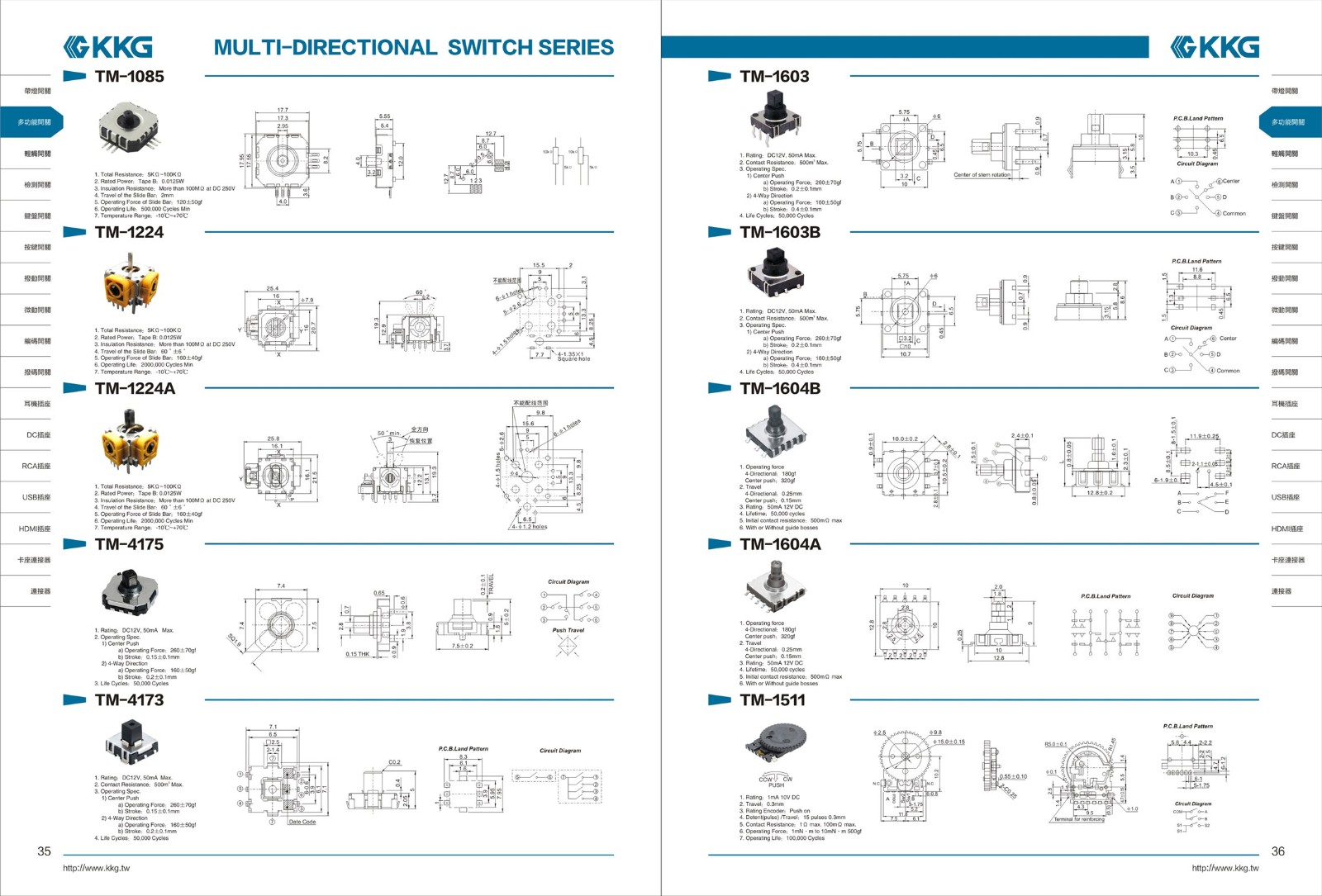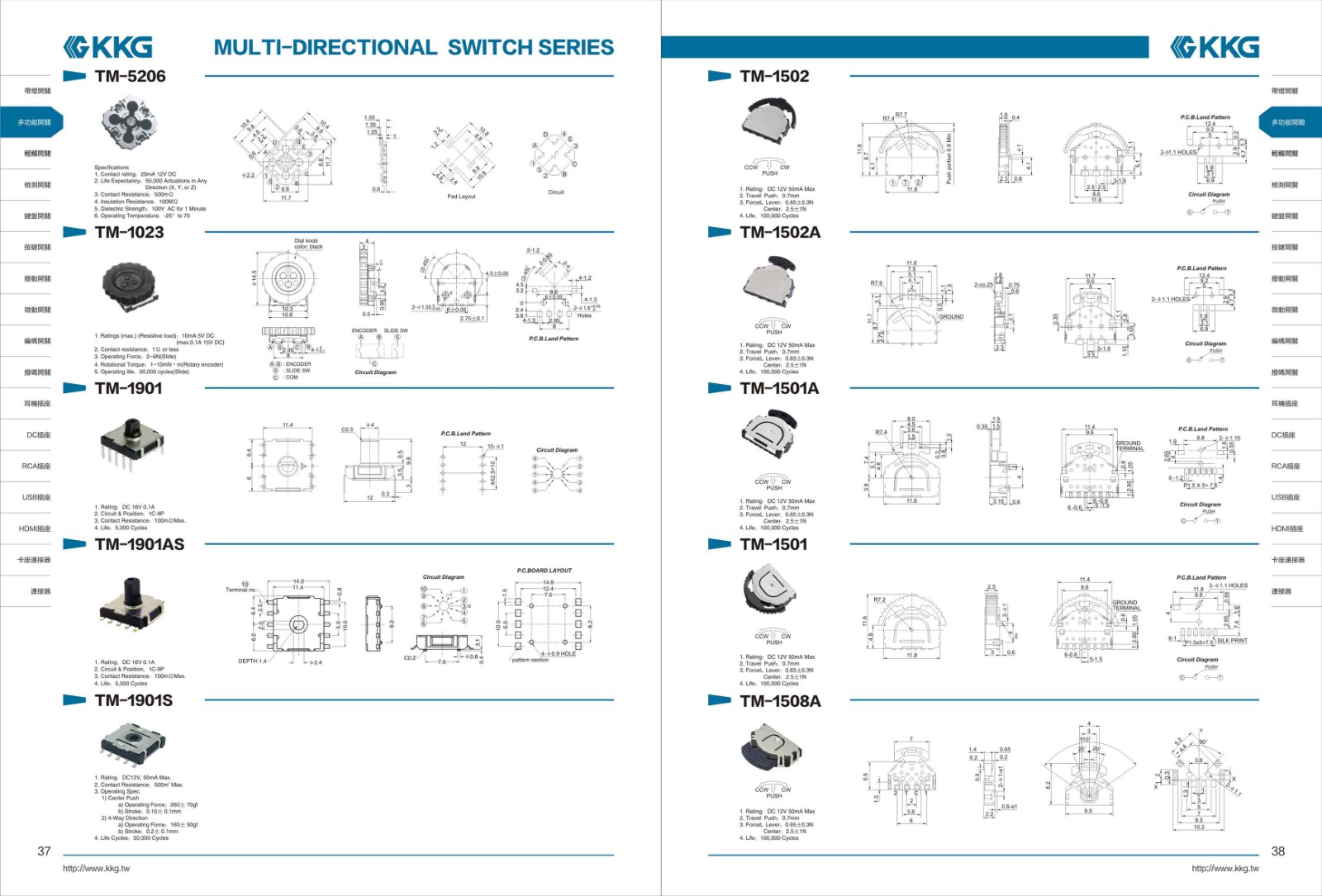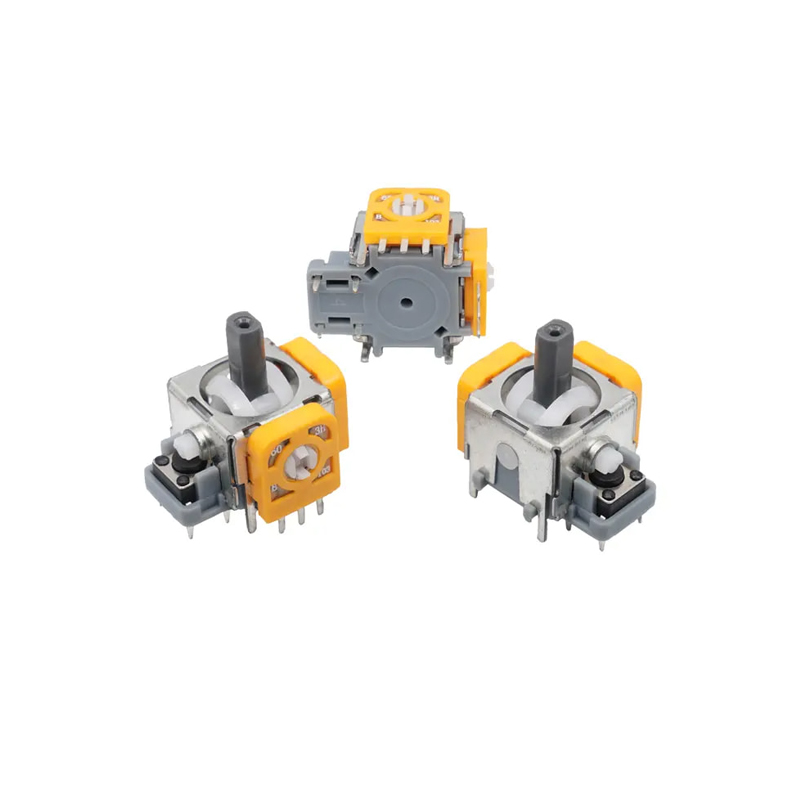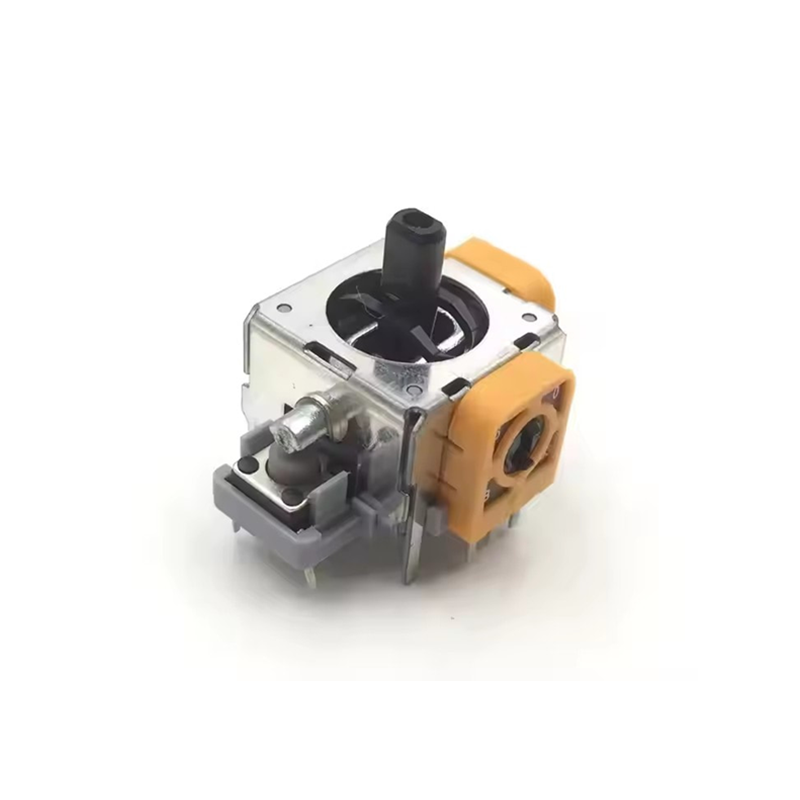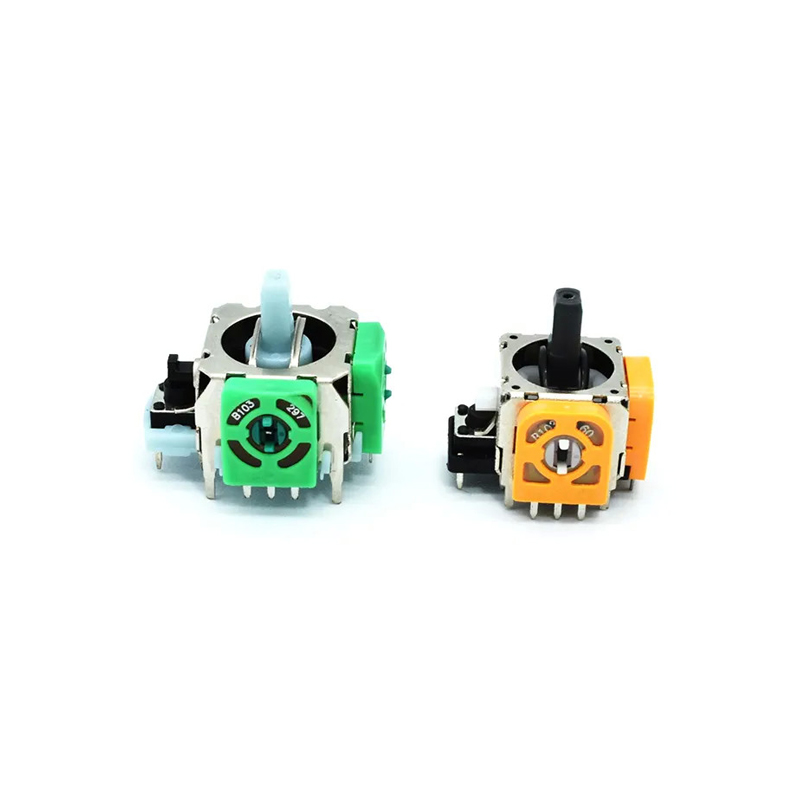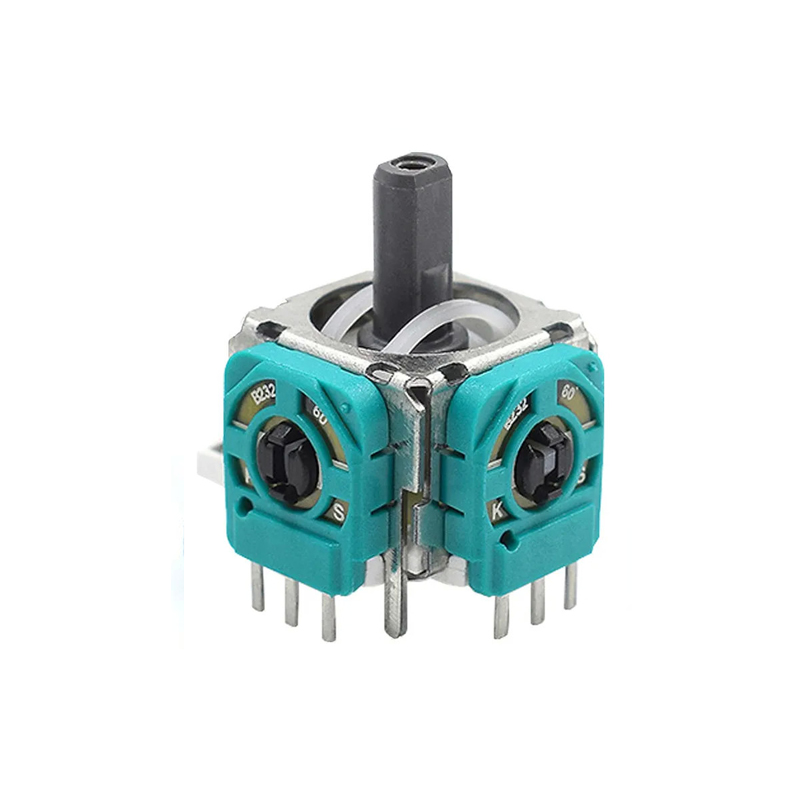
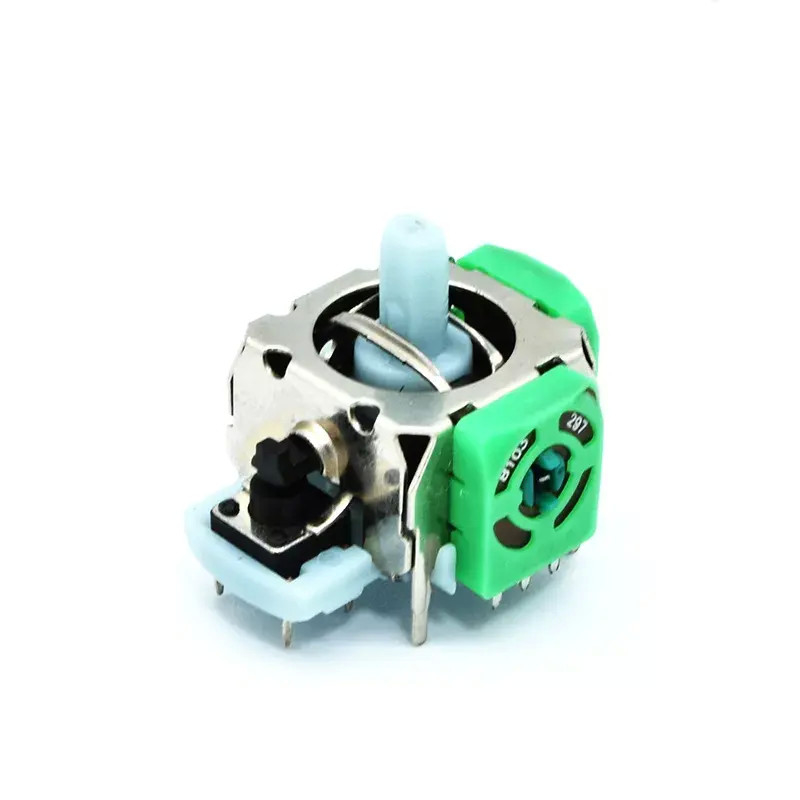
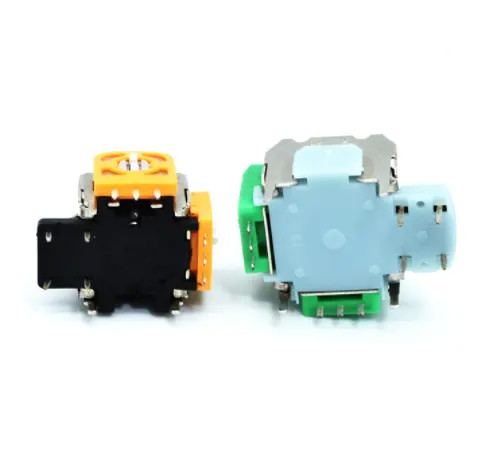
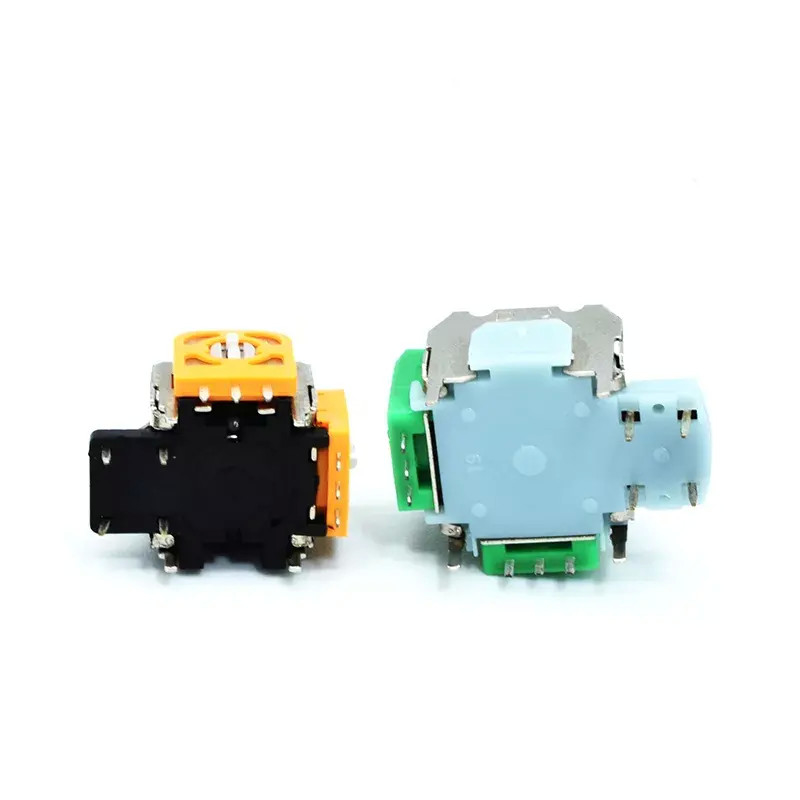
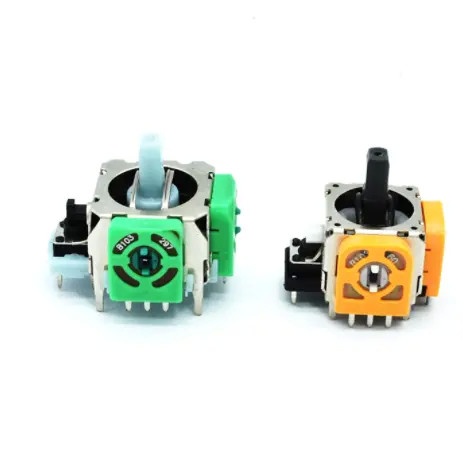
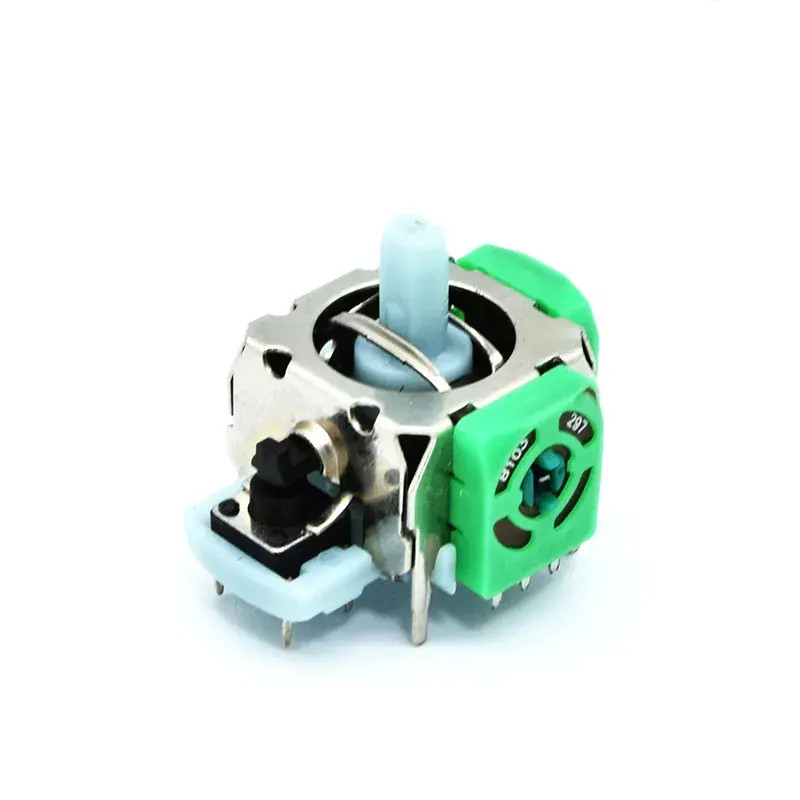
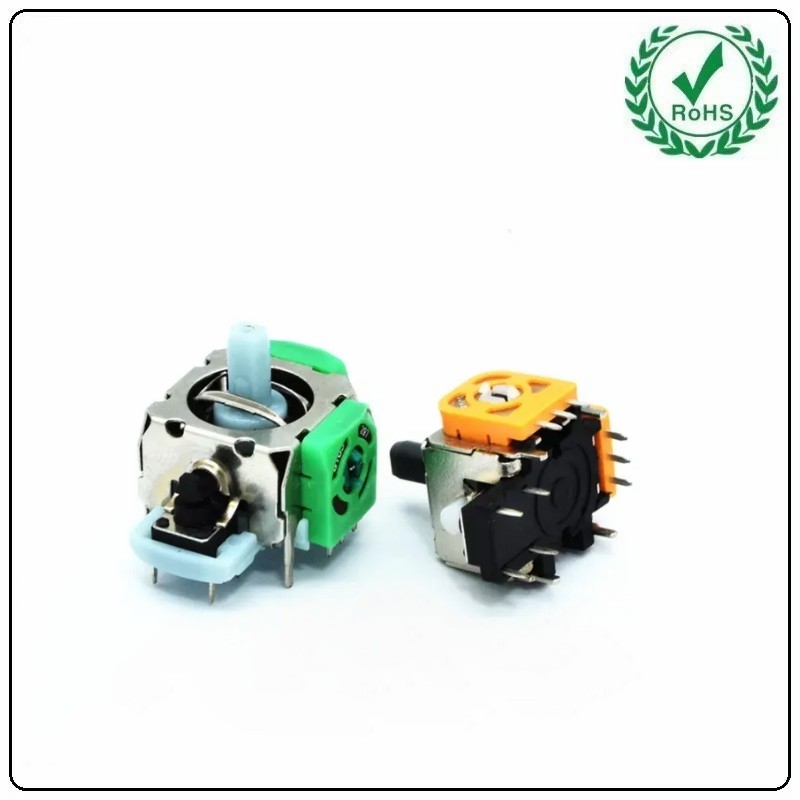
With a resistance range of 10KΩ to 100KΩ, a 55° ±6° lever operating angle, PC pin termination, and a minimum operating life of 100,000 cycles for the potentiometer section, this 10K joystick potentiometer is suitable for game controllers, remote controls, UAV control systems, electronic equipment, industrial control interfaces, and other applications requiring compact analog input.
The component also integrates a Tact Switch, allowing joystick movement and push-button input to be combined into a compact control assembly. OEM and ODM services are available for applications requiring customized specifications or configurations.
Product Overview
| Product Name | Joystick Potentiometer / Rocker Potentiometer |
| Model Number | KKG-RJ16 |
| Brand | KKG |
| Technology | Carbon Film |
| Resistance | 10KΩ–100KΩ |
| Resistance Taper | B |
| Resistance Tolerance | ±20% |
| Rated Power | 0.0125W, B Taper |
| Operating Temperature | −10°C to 70°C |
| Lever Operating Angle | 55° ±6° |
| Termination Style | PC Pin |
| Mounting Type | Top Adjustment / Top Finger Adjustment |
| Certification | TUV, RoHS, ISO |
| Service | OEM / ODM |
 What Is a Joystick Potentiometer?
A joystick potentiometer is a variable resistor used to detect the position or movement of a joystick. Unlike a conventional Rotary Potentiometer that is normally operated by rotating a shaft, a joystick potentiometer uses a lever mechanism to translate directional movement into changes in electrical resistance.
The changing resistance generates an analog electrical signal that can be read by a controller, microprocessor, or other electronic circuit. The system can then determine the direction and degree of joystick movement and respond accordingly.
Because the output varies according to the position of the control lever, joystick potentiometers are suitable for applications requiring proportional rather than simple on/off control.
How Does a Joystick Potentiometer Work?
The working principle of a rocker potentiometer is based on the relationship between a resistive element and a movable contact. The potentiometer contains a carbon resistive track and a movable contact mechanism connected to the joystick lever.
When the joystick is moved, the lever changes the position of the internal contact along the resistive element. This changes the resistance between the electrical terminals.
An electronic control circuit detects the resulting voltage or resistance variation and converts it into an analog position signal. The controller can use this signal to determine the direction and amount of joystick movement.
Operating principle:
Joystick movement → Lever displacement → Contact movement → Resistance change → Analog electrical signal → Controller input
For example, in a game controller, moving the analog stick forward can produce a different output voltage from moving it backward. Intermediate positions generate intermediate signals, allowing the system to achieve proportional control.
Key Features of the Rocker Potentiometer
Precise Analog Control
The joystick potentiometer provides variable electrical output according to lever movement. This allows electronic systems to recognize different degrees of directional input rather than only detecting a fixed position.
10KΩ–100KΩ Resistance Range
The component is available with total resistance values from 10KΩ to 100KΩ, providing flexibility for different circuit designs and analog input requirements.
B-Type Resistance Taper
The potentiometer uses a B resistance taper. This configuration can be used in control applications where the output characteristics need to match the requirements of the electronic circuit.
Carbon Film Technology
The resistive element uses carbon film technology, providing a practical solution for compact analog control components used in electronic equipment.
Long Operating Life
The potentiometer section is specified with an operating life of 100,000 cycles minimum. This makes it suitable for applications involving frequent joystick movement and repeated user operation.
Compact PC Pin Design
The PC pin termination provides a practical connection method for PCB-based electronic assemblies and helps simplify integration into control boards.
Integrated Tact Switch
The component includes an integrated tact switch, allowing the joystick to provide an additional push-button input when the lever is pressed. This can reduce the need for a separate control switch in suitable designs.
Electrical Specifications
| Electrical Parameter | Specification |
|---|---|
| Total Resistance | 10KΩ–100KΩ |
| Total Resistance Tolerance | ±20% |
| Resistance Taper | B |
| Rated Power | 0.0125W, B Taper |
| Maximum Operating Voltage | B Taper: AC 50V / DC 5.0V |
| Sliding Noise | Less than 300mV, by JIS method |
| Insulation Resistance | More than 100MΩ at DC 250V |
| Withstand Voltage | 1 minute at AC 250V, 50–60Hz |
| Operating Temperature | −10°C to 70°C |
| Operating Life | 100,000 cycles Min. |
Mechanical Specifications
| Mechanical Parameter | Specification |
|---|---|
| Lever Operation | Circular Operating |
| Operating Angle | 55° ±6° |
| Rest Position Accuracy | ±5° |
| Stopper Strength | 3.1 kgf.cm Min. for 3 sec |
| Push-Pull Strength | 5.0 kgf Min. for 3 sec |
| Operating Force | 300 gf.cm Max. |
| Actuator Type | Slotted |
| Actuator Diameter | 3mm |
| Actuator Length | 3.2mm |
| Package / Case | Plastic |
Tact Switch Specifications
| Parameter | Specification |
|---|---|
| Maximum Rating | 12V DC, 50mA |
| Operating Force | 820 ±260gf |
| Travel | 0.5 +0.5 / −0.4mm |
Applications of Joystick Potentiometers
Game Controllers and Gaming Equipment
Joystick potentiometers are widely used in gaming control systems that require proportional directional input. The analog output allows players to control movement, steering, aiming, or other functions with varying degrees of precision.
UAV and Remote-Control Systems
In UAV and remote-control equipment, joystick potentiometers can be used to provide analog input for functions such as throttle, yaw, pitch, and roll. The proportional output enables the control system to interpret both direction and movement magnitude.
Industrial Automation
Joystick controls can provide an intuitive interface for selected industrial equipment and automation systems. Operators can use proportional lever movement to control machinery functions such as positioning, speed, or direction.
Material Handling Equipment
Forklifts, cranes, lifting equipment, and other machinery may use joystick-style control interfaces for proportional operation. A suitable potentiometer can convert lever movement into an electrical signal for the machine's control system.
Robotics and Remote-Controlled Equipment
Robotic systems and remotely operated equipment can use analog joystick inputs for directional positioning and movement control. The variable output allows more precise control than a simple digital switch.
Professional Audio and Video Equipment
Joystick potentiometers can also be used in selected professional audio and video control systems where smooth analog adjustment is required, including certain camera control and mixing interfaces.
Advantages of Using a Joystick Potentiometer
Proportional control: Converts physical lever movement into continuously variable electrical signals.
Multi-directional input: Suitable for applications requiring directional joystick operation.
Wide resistance range: Supports resistance values from 10KΩ to 100KΩ.
B taper: Provides a defined resistance characteristic for compatible circuits.
Carbon film construction: Suitable for compact analog control applications.
Long operating life: Potentiometer section rated for at least 100,000 cycles.
Integrated tact switch: Provides an additional push-button control function.
PCB-friendly connection: PC pin termination supports PCB integration.
OEM/ODM support: Suitable for customized electronic control projects.
Joystick Potentiometer vs. Standard Rotary Potentiometer
| Feature | Joystick Potentiometer | Standard Rotary Potentiometer |
|---|---|---|
| Input Method | Lever / joystick movement | Rotary shaft |
| Primary Function | Directional analog input | Rotary resistance adjustment |
| Typical Applications | Controllers, UAVs, remote controls, machinery | Audio, lighting, electronic controls |
| Movement | Multi-directional | Rotational |
How to Choose a Joystick Potentiometer?
Selecting the right joystick potentiometer requires matching both the electrical and mechanical characteristics to the target equipment.
Resistance Value
Check the required resistance value of the control circuit. This model supports resistance values from 10KΩ to 100KΩ, while a B10K configuration may be suitable for applications specifically designed around a 10KΩ B-taper potentiometer.
Operating Angle
The mechanical operating angle affects the range of joystick movement. This model has a specified lever operating angle of 55° ±6°.
Mounting and Termination
Confirm the PCB layout, mounting dimensions, terminal arrangement, actuator dimensions, and available installation space before selecting a replacement or new component.
Operating Life
For frequently operated controllers, operating life is an important consideration. This model provides a specified minimum operating life of 100,000 cycles for the potentiometer section.
Tact Switch Requirements
If the application requires a push-button function in addition to analog joystick control, verify the tact switch rating, operating force, and travel requirements.
Maintenance of Joystick Potentiometers
Because joystick potentiometers are mechanical components with moving parts, keeping the control area clean can help maintain consistent operation. Dust and debris around the actuator or control mechanism may affect the user interface or contribute to abnormal operation over time.
During equipment maintenance, inspect the joystick assembly for contamination, excessive mechanical wear, or abnormal movement. Cleaning and maintenance procedures should follow the recommendations of the equipment manufacturer and should avoid damaging the resistive element or internal mechanism.
Joystick Potentiometer Manufacturer
As a professional joystick potentiometer manufacturer, we provide analog control components for electronic equipment, gaming devices, remote-control systems, UAV applications, and industrial control interfaces.
Our rocker potentiometers can be evaluated according to resistance value, resistance taper, operating angle, actuator configuration, mounting requirements, electrical specifications, and application conditions.
For OEM and ODM projects, customers can provide the required resistance, mechanical dimensions, terminal configuration, operating force, control angle, and other technical requirements. Our team can assist in selecting a suitable joystick potentiometer configuration for the application.
FAQ
What is a joystick potentiometer used for?
A joystick potentiometer is used to convert joystick movement into variable electrical signals. It is commonly used for analog directional control in game controllers, UAV remote controls, industrial equipment, and other electronic systems.
What is a 10K joystick potentiometer?
A 10K joystick potentiometer generally refers to a joystick potentiometer with a nominal total resistance of 10KΩ. The B10K configuration is commonly used where a 10KΩ resistance and B-type taper are required.
What is the resistance range of this joystick potentiometer?
The specified total resistance range is 10KΩ to 100KΩ, with a resistance tolerance of ±20%.
What type of resistive material is used?
The potentiometer uses a carbon film resistive element.
What is the operating angle of the joystick?
The specified lever operating angle is 55° ±6°, with rest position accuracy of ±5°.
How long can the joystick potentiometer operate?
The potentiometer section has a specified operating life of 100,000 cycles minimum.
Can it be used as a B10K replacement potentiometer?
It can be considered for B10K replacement applications when the resistance, taper, mechanical dimensions, actuator configuration, terminal arrangement, and other specifications match the original component.
Does the product include a tact switch?
Yes. The product includes an integrated tact switch rated at 12V DC and 50mA, with an operating force of 820 ±260gf and travel of 0.5 +0.5 / −0.4mm.