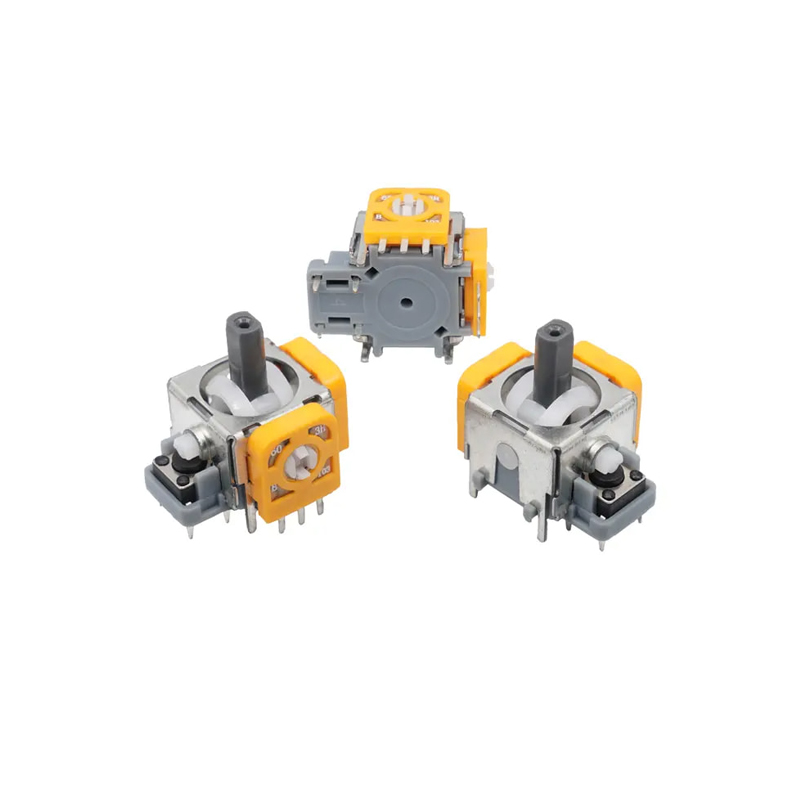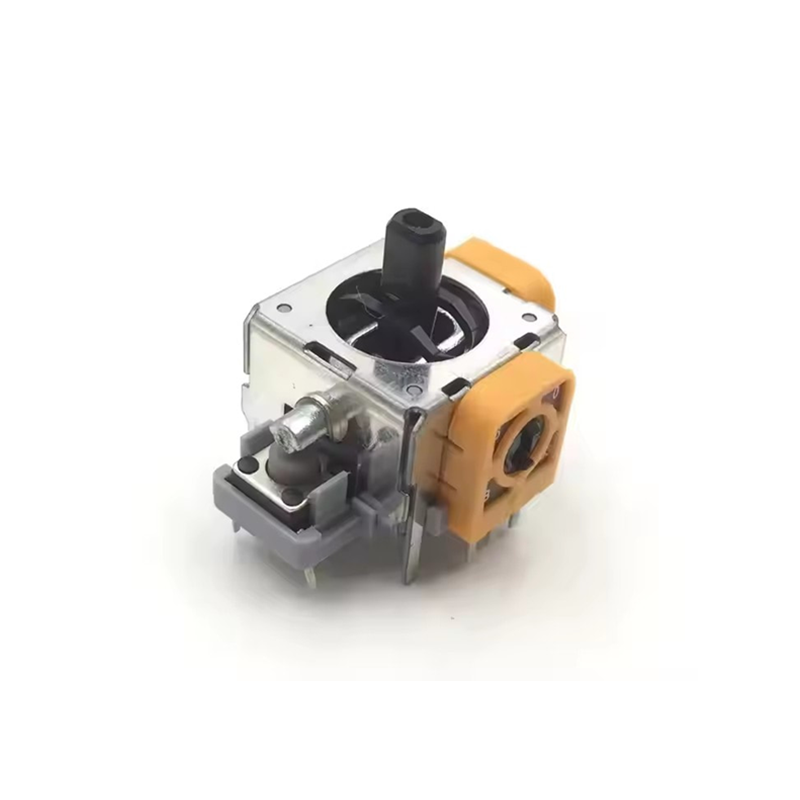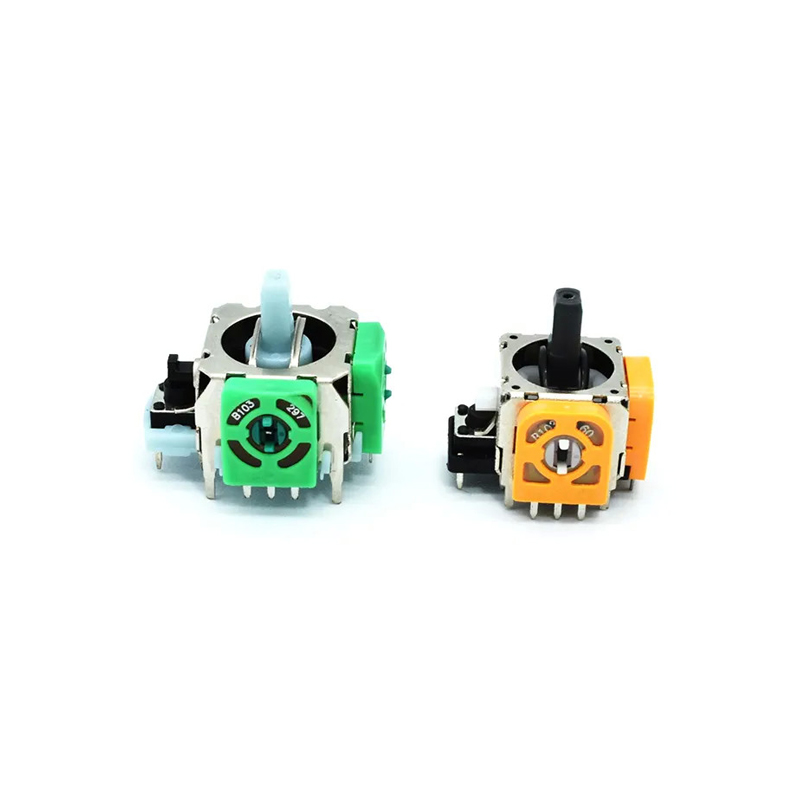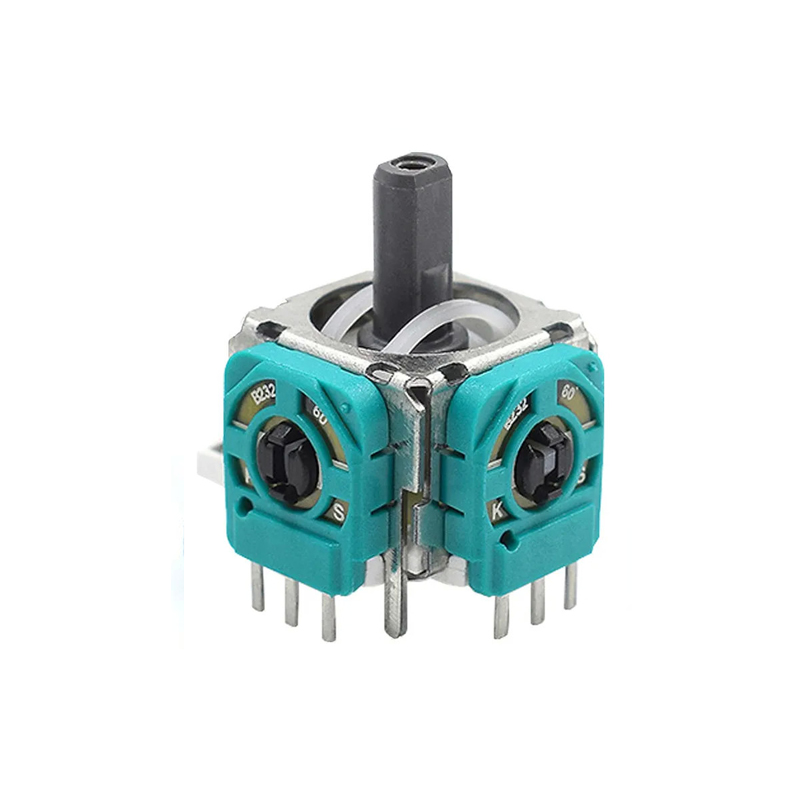
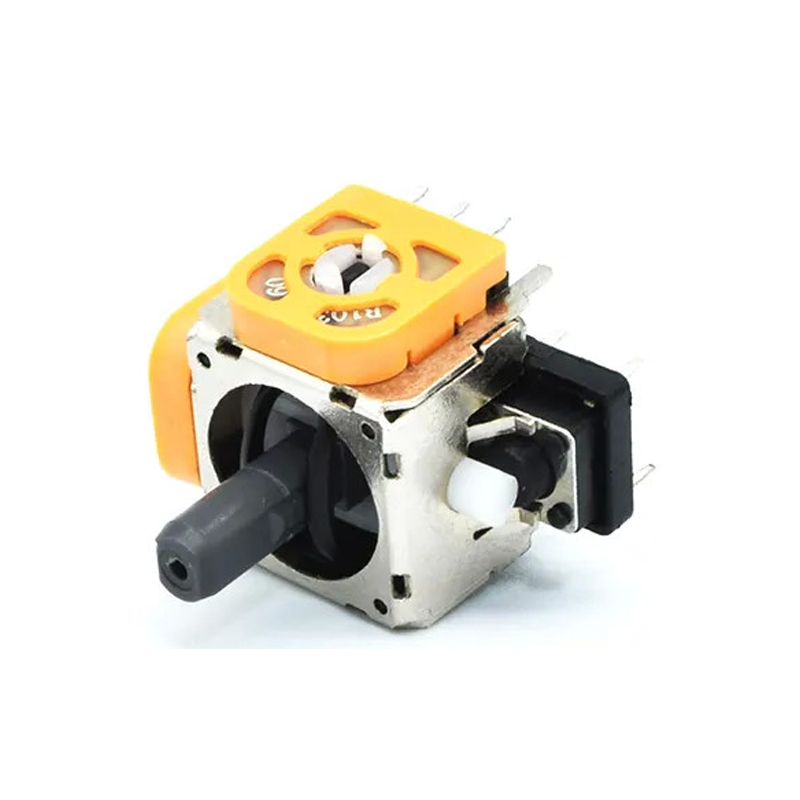
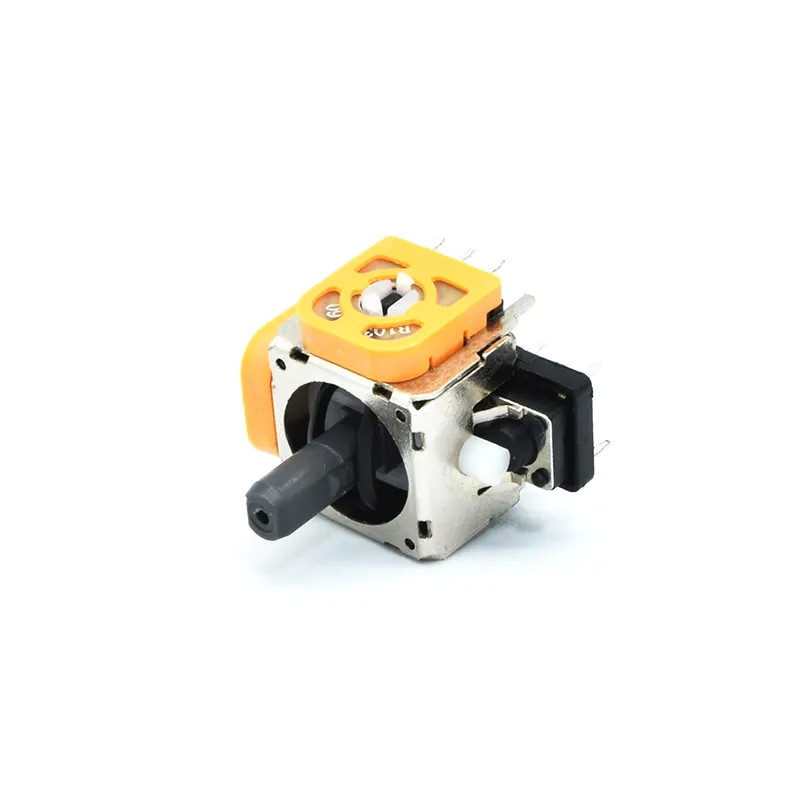
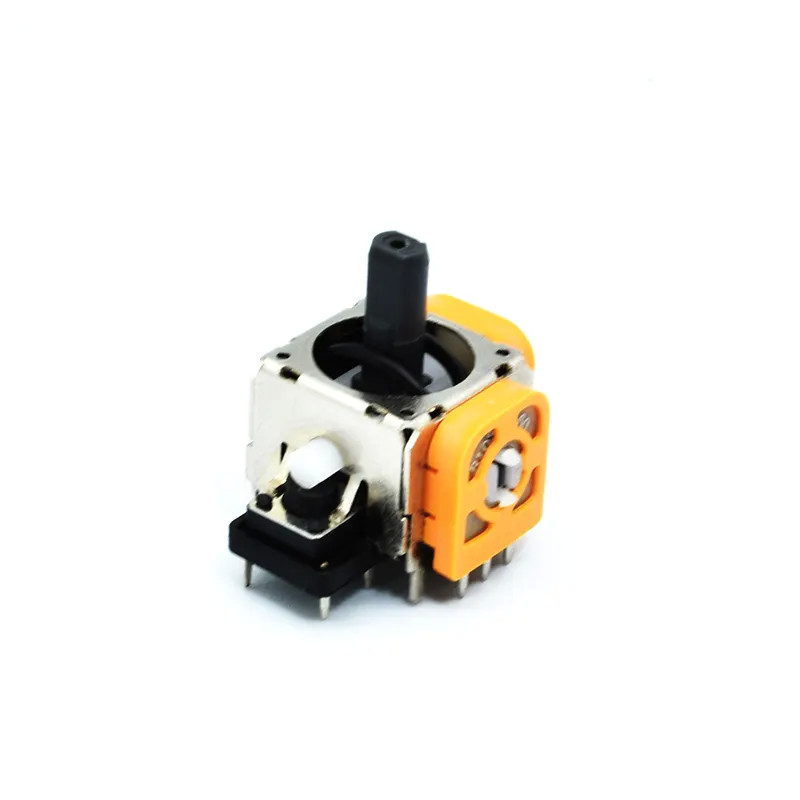
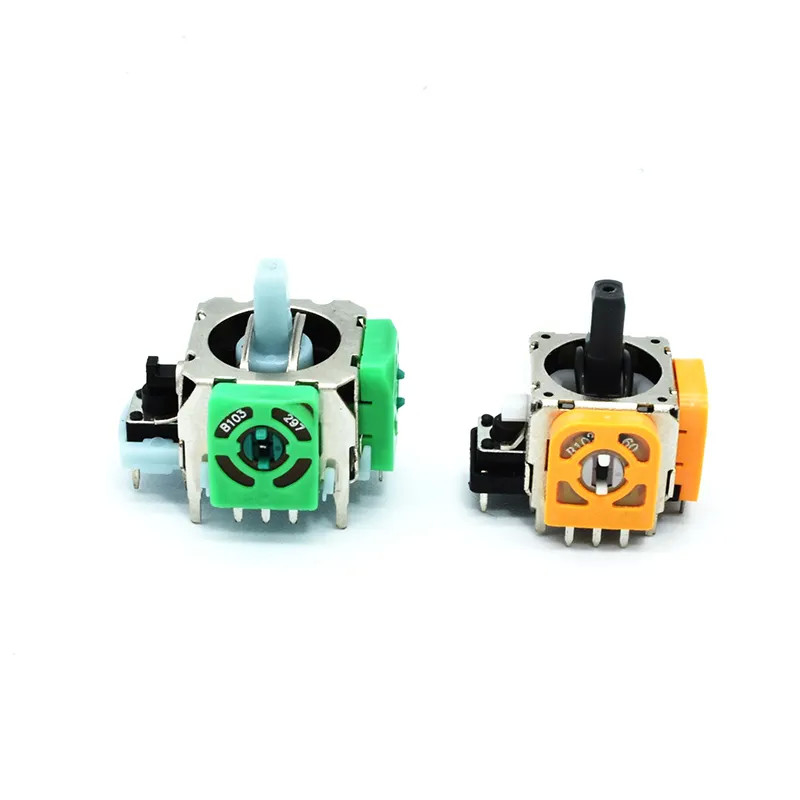
Product Type: Joystick Potentiometer
Model: KKG-RJ16
Resistance: 5KΩ–2MΩ
Rotation: 300°
Technology: Carbon Film
Operating Temperature: -20°C to +70°C
Bushing Thread: M7
Service: OEM / ODM
| Product Name | Joystick Potentiometer | Model | KKG-RJ16 |
| Potentiometer Type | Rocker / Rotary Potentiometer | Resistance | 5K-2MΩ |
| Resistance Tolerance | ±20% (More Than 1MΩ: ±30%) | Rotation | 300° |
| Technology | Carbon Film | Resistive Material | Carbon |
| Bushing Thread | M7 | Termination | PC Pin |
| Actuator Type | Knob | Shaft Type | Plastic |
| Package / Case | Metal | Mounting Type | Insert |
| Operating Temperature | -20°C to +70°C | Rated Power | 0.15W |
| Max. Operating Voltage | 200V AC | Diameter | 24mm |
| Built-in Switch | None | Service | OEM / ODM |
| Certification | CE / ISO9001 | Place of Origin | Guangdong, China |

This Joystick Potentiometer is a compact rotary control component designed to provide variable electrical resistance in electronic control systems. It uses carbon film resistive technology and a practical mechanical structure to support smooth and proportional adjustment.
The KKG-RJ16 model is suitable for applications requiring reliable manual control, including electronic games, control interfaces, consumer electronics and other equipment. With a resistance range of 5KΩ to 2MΩ and a 300° rotation, it provides flexible configuration options for different circuit designs.
The potentiometer is equipped with an M7 bushing thread and PC pin termination, making it suitable for PCB-based electronic assemblies. OEM and ODM services are also available for projects requiring customized configurations.
The Joystick Potentiometer uses carbon film as the resistive material. Carbon film technology provides a practical solution for variable resistance control in a wide range of electronic devices.
The available resistance range is 5KΩ to 2MΩ, allowing the component to be selected for different circuit requirements. This makes the potentiometer suitable for various voltage adjustment, signal control and user-interface applications.
The 300° rotation provides a broad adjustment range for manual control. The rotary structure can be integrated into equipment requiring continuous or variable adjustment rather than simple switching.
The component features an M7 bushing thread and PC pin termination for convenient installation in electronic assemblies. Its compact construction helps simplify integration into space-limited control panels and devices.
The potentiometer is designed for repeated adjustment and stable mechanical operation. Its structure is suitable for applications where users frequently adjust control parameters such as volume, speed, position or other variable settings.
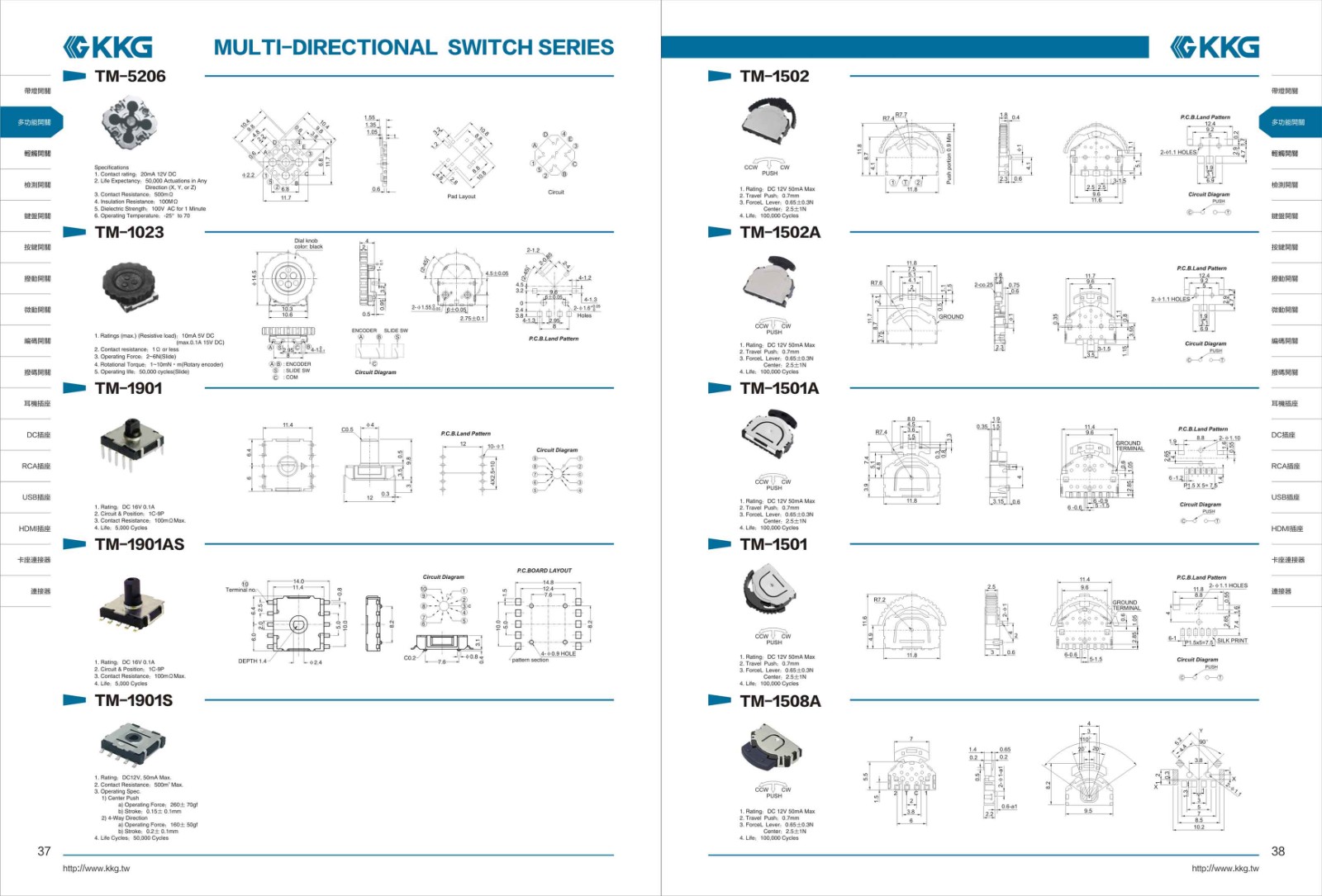
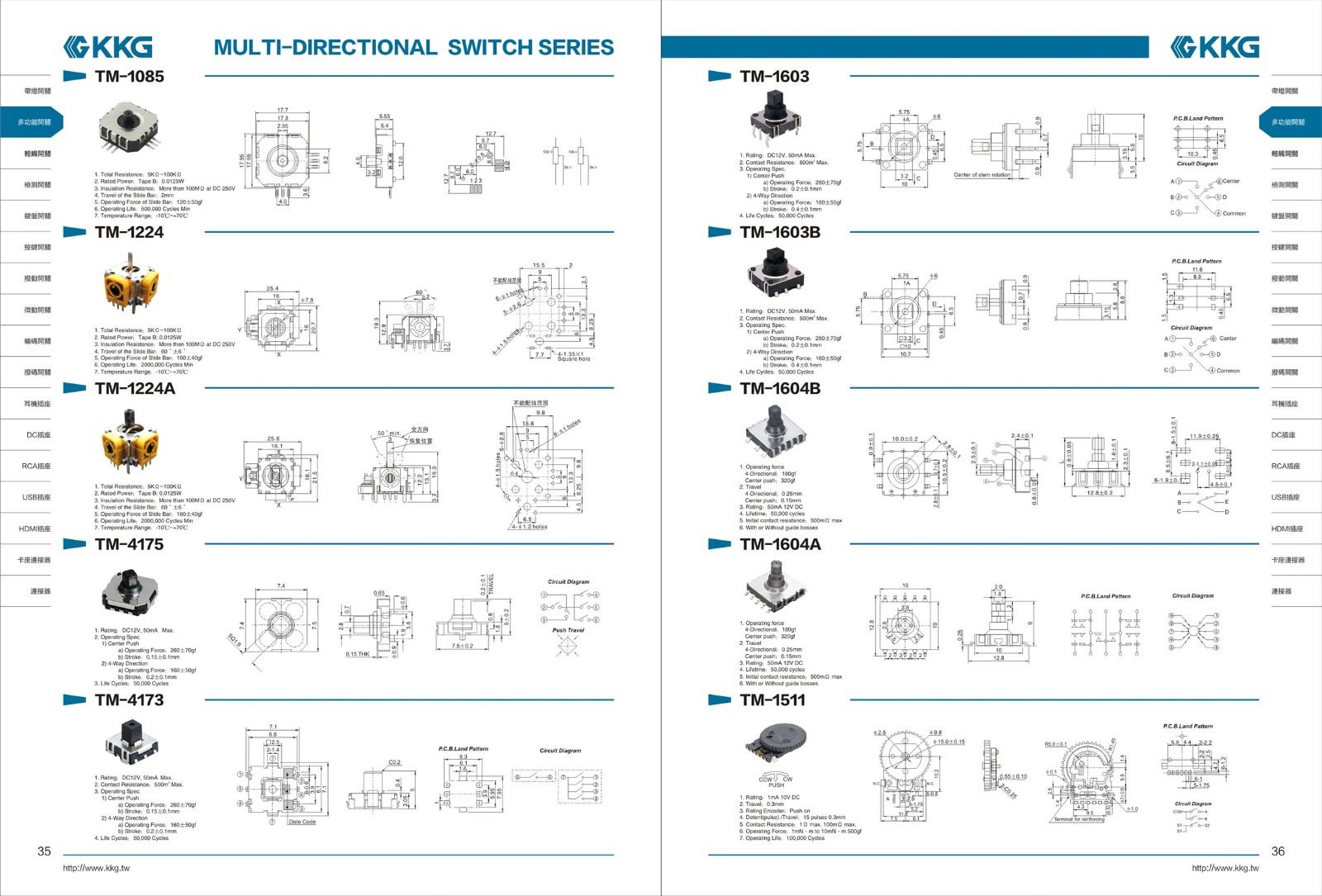
| Total Resistance | 10KΩ-100KΩ |
| Total Resistance Tolerance | ±20% |
| Resistance Taper | B |
| Maximum Operating Voltage | AC 50V / DC 5.0V |
| Rated Power | 0.0125W |
| Sliding Noise | Less than 300mV |
| Insulation Resistance | More than 100MΩ at DC250V for 1 minute |
| Withstand Voltage | AC 250V for 1 minute |
| Operating Life | 100,000 cycles minimum |
| Travel | 0.25 +0.2 / -0.1mm |
| Operating Force | 480 ±150gf |
| Accuracy of Rest Position | ±5° |
| Operating Angle of Lever | 55 ±6° |
Joystick potentiometers can be used in control interfaces where operators need variable and proportional adjustment. They can support equipment control functions such as speed, position and directional input.
Potentiometer-based control components are commonly used in electronic games and controller interfaces. They can translate mechanical movement into variable electrical signals for responsive user control.
The component can be used for manual adjustment functions in consumer electronic equipment, including volume control, parameter adjustment and other variable-control interfaces.
A Rotary Potentiometer can be used as a variable resistor or voltage divider for audio equipment and volume adjustment circuits, depending on the electrical configuration of the application.
Joystick-style potentiometer structures can be integrated into remote control and simulation equipment where proportional mechanical input is required.
The compact mounting structure makes the potentiometer suitable for electronic panels and user interfaces requiring manual rotary or joystick-style adjustment.
A Joystick Potentiometer works by converting mechanical movement into a change in electrical resistance. When the actuator or joystick is moved, the wiper travels across the resistive element and changes the resistance between the terminals.
The resulting voltage or resistance change can be detected by the electronic circuit and interpreted as a control signal. This allows the potentiometer to provide proportional adjustment for functions such as speed, position, volume or directional control.
Depending on the circuit design, the potentiometer can work as a variable resistor or as a voltage divider. This flexibility is one of the main reasons potentiometers are widely used in electronic control systems.
Both joystick potentiometers and rotary potentiometers use variable resistance to generate electrical control signals, but their mechanical interfaces can differ. A standard rotary potentiometer is generally operated by rotating a knob or shaft, while a joystick potentiometer is designed to detect movement through a lever or rocker mechanism.
For applications requiring direct user interaction and proportional directional control, a joystick-style design can provide a more intuitive operating experience. For simple adjustment functions such as volume or parameter settings, a conventional rotary potentiometer may be more suitable.
Different electronic products may require different resistance values, shaft configurations, mounting dimensions, terminal structures and operating characteristics. We provide OEM and ODM potentiometer solutions according to customer requirements.
If you require a customized Joystick Potentiometer, Rocker Potentiometer or Rotary Potentiometer, please provide product drawings, samples, electrical specifications or application requirements. Our team can evaluate the specifications and provide a suitable configuration for your project.
A Joystick Potentiometer is a variable resistor component that converts mechanical joystick or lever movement into a corresponding electrical signal. It is commonly used for proportional control in electronic devices.
This model supports a resistance range of 5KΩ to 2MΩ. Specific resistance configurations should be confirmed according to the requirements of the application.
The specified rotation is 300°, providing a broad adjustment range for rotary control applications.
The standard KKG-RJ16 configuration is specified as having no built-in switch. If a potentiometer with a switch is required, please contact us to discuss available configurations.
The resistive element uses carbon film, while the shaft is specified as plastic. The overall construction is designed for practical electronic control applications.
The specified operating temperature range is -20°C to +70°C.
Yes. OEM and ODM services are available. Customers can provide drawings, samples or technical specifications for customized potentiometer requirements.
Previous: Joystick Potentiometer
Tel:
Add:
Rixing Industrial Zone,Tangxia Town, Dongguan City, Guangdong Province, China


Copyright © 2026 KKG ELECTRONICS ELECTRIC C0., LTD. All rights reserved
Privacy policy Cookie tracking